Tuesday, November 28, 2006

Move update--Nov. 28, 2006

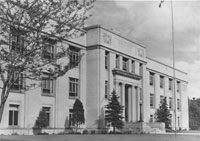
It's happening now, people! The boxes and boxes of books are being emptied and shelved in the basement of the Hathaway building as I type. I've been given a 5 minute break to let you know what's going on--then I am back to the LC classification system.

Our offices have not been moved yet, but it's scheduled for this week. They are currently moving and setting up the Justices' and Staff Attorneys' offices. In the meantime, we are doing all we can to round up slave labor for shelving. We have been lucky only once on that front. However, she left on a flimsy excuse and escaped.

So, Kathy's goal for opening us back up again is now December 15, 2006. The shelving is moving along fairly rapidly. We think this is a pretty realistic date. For the next few days, we have no telephones and limited computer access. The best way to get hold of us is by email.

Monday, November 20, 2006

E-discovery continued

Legal researchers have an excellent resource available from Sabrina Pacifici with her online journal, LLRX.com and her daily web log, beSpacific. A recent post to LLRX.com was about ways for attorneys to keep abreast of developments in e-discovery called Keeping Current with E-discovery Law. The author recommends attorneys research the law of their jurisdiction (the Wyoming Judicial Branch has a link on their homepage to access Court rules), he suggests they subscribe to a newsletter (check out the Lexis newsletters available) and consider attending a CLE program on the subject.

Friday, November 17, 2006

Summary 2006 WY 148

Summary of Decision issued November 17, 2006

[SPECIAL NOTE: This opinion uses the "Universal Citation." It was given an "official" citation when it was issued. You should use this citation whenever you cite the opinion, with a P.3d parallel citation. Please note when you look at the opinion that all of the paragraphs are numbered. When you pinpoint cite to a quote, you should cite to this paragraph number rather than to any page number. If you need assistance in putting together a citation using the Universal Citation form, please contact the Wyoming State Law Library.]

Summaries are prepared by Law Librarians and are not official statements of the Wyoming Supreme Court.

Case Name: Fertig v. State

Citation: 2006 WY 148

Docket Number: 04-56

Appeal from the District Court of Platte County, the Honorable Keith G. Kautz, Judge

Representing Appellant (Defendant): Kenneth M. Koski, State Public Defender; Donna D. Domonkos, Appellate Counsel; Tina N. Kerin, Senior Assistant Public Defender.

Representing Appellee (Plaintiff): Patrick J. Crank, Attorney General; Paul S. Rehurek, Deputy Attorney General (counsel); D. Michael Pauling, Senior Assistant Attorney General.

Issue: Whether a traffic stop initiated by law enforcement after observing a traffic offense violates Article 1, Section 4 of the Wyoming Constitution when the primary purpose of the stop is to conduct a search for evidence of illegal drug activity.

Holding: Wheatland police had received information indicating that illegal drug activities were taking place at a specific residence in Wheatland. Surveillance was established and officers positioned their vehicles along the two most likely routes of travel. The vehicle in question was spotted and the speed was recorded in excess of the 30mph zone. During the course of the stop, an officer observed drug paraphernalia in the glove box. He concluded he had probable cause to search the vehicle for illegal controlled substances. Fertig was arrested for possession of drug paraphernalia and a bag containing methamphetamine was found in his pocket. Fertig appealed from a judgment and conviction following his entry of a conditional guilty plea to one count of felony possession of a controlled substance. The district court denied his motion to suppress evidence obtained after he had been stopped for speeding by Wheatland police.
Standard of Review: The Court will not disturb the factual findings of the district court in determining a motion to suppress unless the findings are clearly erroneous. Whether an unreasonable search or seizure occurred in violation of constitutional rights presents a question of law which the Court reviews de novo.
The Court stated that the sole issue presented was whether a pretextual traffic stop violated Article 1, Section 4 of the Wyoming State Constitution. A pretextual stop occurs when the police use a legal justification to make the stop in order to search a person or place, or to interrogate a person, for an unrelated crime for which they did not have the reasonable suspicion to support a stop. According to Fertig, the underlying motive rendered the stop unconstitutional at its inception. Fertig contended that the Wyoming Constitution affords greater individual protection than the Fourth Amendment of the U.S. Constitution.
The Court’s review requires that searches and seizures be reasonable under all the circumstances. Reasonableness depends upon a balance between the public interest and the individual’s right to personal security free from arbitrary interference by law officers. In O’Boyle, the Court determined that the principles for assessing the reasonableness of a traffic stop under the Fourth Amendment were not significantly different than those applicable separately under the Wyoming Constitution. In O’Boyle, the focus of the Court’s constitutional analysis involved an evaluation of police conduct after the stop. The Court did not question an officer’s authority to initiate a traffic stop after an observed traffic violation. In Damato, the Court recognized that an officer has probable cause to initiate a traffic stop when the officer personally observes a traffic violation. The Court declined to move away from the reasoning of the Whren decision.
The Court concluded that a traffic stop initiated by a law enforcement officer after personally observing a traffic violation is supported by probable cause and does not violate Article 1, Section 4 of the Wyoming Constitution, regardless of the officer’s primary motivation. The Court’s holding addressed only the initial police action upon which the vehicular stop was predicated. The scope, duration and intensity of the seizure as well as any search made by the police subsequent to the stop remain subject to the strictures of Article 1, Section 4 and judicial review. The nature of the traffic offense remains relevant in determining whether the search and seizure was “reasonable under all the circumstances” as required by Article 1, Section 4.
It was undisputed that the officer personally observed the traffic violation and had probable cause to initiate the traffic stop. The scope, duration and intensity of the seizure after the initial stop were not contested. Therefore, the district court properly denied the motion to suppress.

Affirmed.

J. Burke delivered the opinion of the court.

Link to the case: http://tinyurl.com/thbd2 .

Wednesday, November 15, 2006

Summary 2006 WY 147

Summary of Decision issued November 15, 2006

[SPECIAL NOTE: This opinion uses the "Universal Citation." It was given an "official" citation when it was issued. You should use this citation whenever you cite the opinion, with a P.3d parallel citation. Please note when you look at the opinion that all of the paragraphs are numbered. When you pinpoint cite to a quote, you should cite to this paragraph number rather than to any page number. If you need assistance in putting together a citation using the Universal Citation form, please contact the Wyoming State Law Library.]

Summaries are prepared by Law Librarians and are not official statements of the Wyoming Supreme Court.

Case Name: Hoy v. K.C. Miller, et al

Citation: 2006 WY 147

Docket Number: 05-294

Appeal from the District Court of Campbell County, the Honorable Dan R. Price II, Judge

Representing Appellants (Plaintiffs): Virgil G. Kinnaird of Kinnaird Law Office, PC, Sheridan, Wyoming.

Representing Appellees (Defendants): Patrick G. Davidson, Matthew R. Sorenson and Tad T. Daly of Daly Law Associates, LLC, Gillette, Wyoming. Argument by Mr. Daly.

Issue: Whether the district court erred in its application of a negligence standard in finding that there was no breach of duty, or stated in the alternative, failing to find that Miller had produced no evidence of the exceptions to absolute liability. Whether the district court erred in finding no proximate cause.

Holding: The properties in question are located north of Gillette. Hoy alleges that water seeps through the bottom of the stock reservoir on Miller’s property and runs down to Hoy’s property creating a groundwater problem for him.
Standard of Review: The Court reviews a trial court’s conclusions of law de novo. The Court reviews a trial judge’s findings of fact to determine if they are clearly erroneous. The Court does not re-weigh the disputed evidence nor do they substitute their judgment for that of the trial court.

Absolute Liability and Proximate Cause: Absolute liability is imposed on certain conduct regardless of whether or not such conduct is negligent. Absolute liability extends to damages proximately caused by the alleged harmful conduct. The Court stated they did not need to decide the issue of whether Miller was subject to absolute liability if Hoy’s alleged damages were not proximately caused by any conduct of Miller. The existence of proximate cause is a question of fact. The district court’s finding on proximate cause would not be set aside unless it was clearly erroneous. The Court reviewed the evidence from Hoy’s one expert and Miller’s three experts. All three experts discredited Hoy’s expert’s investigation as not thorough enough to allow him to validly conclude that there was any correlation between water in the reservoir and Hoy’s high groundwater.
Hoy needed to present sufficient proof that his damages were caused by seepage from Miller’s reservoir. The district court found that Hoy had failed to fulfill the burden. Upon review of the record, the Court found ample evidence supporting the decision of the district court.

Affirmed.

J. Golden delivered the decision.

Link to the case: http://tinyurl.com/y5hzm9 .

Monday, November 13, 2006

Summary 2006 WY 146

Summary of Decision issued November 13, 2006

[SPECIAL NOTE: This opinion uses the "Universal Citation." It was given an "official" citation when it is issued. You should use this citation whenever you cite the opinion, with a P.3d parallel citation. You will also note when you look at the opinion that all of the paragraphs are numbered. When you pinpoint cite to a quote, you should cite to this paragraph number rather than to any page number. If you need assistance in putting together a citation from this, or any future opinion using the Universal Citation form, please contact the Wyoming State Law Library.]

Summaries are prepared by Law Librarians and are not official statements of the Wyoming Supreme Court

Case Name: Rodriguez v. State of Wyoming, ex rel., Wyoming Workers' Safety and Compensation Division

Citation: 2006 WY 146

Docket Number: 06-46

Appeal from the District Court of Laramie County, Honorable Peter G. Arnold, Judge

Representing Appellant (Petitioner): Guy P. Cleveland, of Cleveland Law Office, Cheyenne, Wyoming

Representing Appellee (Respondent): Patrick J. Crank, Attorney General; John W. Renneisen, Deputy Attorney General; Steven Czoschke, Senior Assistant Attorney General; Kristi M. Radosevich, Assistant Attorney General

Date of Decision: November 13, 2006

Issues: Whether in denying Appellant's claim for worker's compensation benefits the Office of Administrative Hearings (OAH) acted arbitrarily, capriciously, abused its discretion, or otherwise acted not in accordance with law within the meaning of W.S. § 16-3-114(c). Whether the OAH's erred in its determination that Appellant failed to meet her burden of proof.

Holdings: A party seeking judicial review of an administrative action must comply with the Wyoming Rules of Appellate Procedure. When a party fails to do so, the Court may refuse to consider the offending party's contentions; assess costs; dismiss the appeal; or affirm the lower court's or agency's decision. In the present action, the Appellant failed to provide any citation to the Wyoming Workers' Compensation Act or a specific provision contained therein pertinent to the issues of her case. She also failed to set forth the elements of her claim and did not cite to the record or provide relevant legal authority to support her contentions. The cumulative deficiencies result in a failure to present cogent argument. Additionally, it should be noted that Appellant's brief failed to comply, in multiple respects, with the requirements of W.R.A.P. 7.01. Therefore, the decision of the OAH is summarily affirmed.

J. Burke delivered the opinion for the court.

Link: http://tinyurl.com/yjsy6p .

Summary 2005 WY 145

Summary of Decision issued November 9, 2006

[SPECIAL NOTE: This opinion uses the "Universal Citation." It was given an "official" citation when it was issued. You should use this citation whenever you cite the opinion, with a P.3d parallel citation. Please note when you look at the opinion that all of the paragraphs are numbered. When you pinpoint cite to a quote, you should cite to this paragraph number rather than to any page number. If you need assistance in putting together a citation using the Universal Citation form, please contact the Wyoming State Law Library.]

Summaries are prepared by Law Librarians and are not official statements of the Wyoming Supreme Court.

Case Name: City of Torrington v. Cottier

Citation: 2006 WY 145

Docket Number: 05-267

Appeal from the District Court of Goshen County, the Honorable Keith G. Kautz, Judge

Representing Appellant (Defendant): Loyd E. Smith of Murane & Bostwick, Cheyenne, Wyoming.

Representing Appellee (Plaintiff): Michael E. Warren of Sawyer & Warren, PC, Torrington, Wyoming.

Issue: Whether the waiver of governmental immunity for the “operation” of public utilities found in W.S. § 1-39-108(a) extends to “maintenance” of public utilities.

Holding: Cottier obtained a judgment against the City of Torrington after his rental property was damaged by the backup of raw sewage. The City appealed claiming immunity under the Wyoming Governmental Claims Act.
Standard of Review: Resolution of the issue in the instant case requires interpretation and application of the Wyoming Governmental Claims Act, Wyo. Stat. Ann. §§ 1-39-101. Statutory interpretation is a question of law which the Court reviews de novo.
Discussion: The City contends that Cottier’s claim for damages was precluded by governmental immunity. The City claimed it was immune from liability under the facts of the case. The WGCA is a close-ended tort claims act. Unless a claim falls within one of the statutory exceptions to governmental immunity, it will be barred. The City characterized the issue as one of maintenance versus operation to determine immunity. The Court determined the proper question was what the legislature meant by the phrase “operation of a public utility.” "Operation” was not defined by the legislature so the Court furnished the ordinary meaning of “the state of being operative or functional.” Testimony supported the meaning to include maintenance of the system. The Court has recognized that operation of a public utility entails keeping the sewer system free from blockage. The Court referred to South Cheyenne Water and Sewer District v. Stundon and Lore v. Town of Douglas as examples of the Court’s decisions in this area. The City attributed significance to the legislature’s use of the term “operation.” The Court was not persuaded stating that applying the plain and ordinary meaning of the term did not result in inserting words into the statute. “Operation of a public utility” is a broad concept which includes acts required to keep the utility functional. The Court distinguished their decision in Harbel from the instant case. The Court found in Harbel the operation of a vehicle distinct from maintenance of a motor vehicle. They stated the distinction would have been difficult to make in the context of public utilities.
Wyo. Stat. Ann. § 1-39-108 waives immunity for negligence in keeping the public utility operable or functional. If an obstruction in the line occurs and is not removed, the sewer lines are no longer functional or operable. The WGCA was intended to afford a remedy to persons injured by negligent public employees while avoiding the repeated litigation of the question of governmental immunity. The legislature intended for a public utility to be liable in circumstances relating to the operation of a public utility. Adoption of the reasoning urged by the City would render the intended waiver of immunity illusory. The Court found no error in the district court’s determination that the City’s negligent acts fell within the waiver of immunity provided by the statute.

Affirmed.

J. Burke delivered the decision.

Link to the case: http://tinyurl.com/y6tkny .

summary 2006 WY 144

Summary of Decision issued November 9, 2006

[SPECIAL NOTE: This opinion uses the "Universal Citation." It was given an "official" citation when it was issued. You should use this citation whenever you cite the opinion, with a P.3d parallel citation. Please note when you look at the opinion that all of the paragraphs are numbered. When you pinpoint cite to a quote, you should cite to this paragraph number rather than to any page number. If you need assistance in putting together a citation using the Universal Citation form, please contact the Wyoming State Law Library.]

Summaries are prepared by Law Librarians and are not official statements of the Wyoming Supreme Court.

Case Name: Dorr v. Wyoming Board of Certified Public Accountants

Citation: 2006 WY 144

Docket Number: 06-12

Appeal from the District Court of Campbell County, the Honorable John C. Brooks, Judge

Representing Appellant (Petitioner): Greg L. Goddard of Goddard, Wages & Vogel, Buffalo, Wyoming.

Representing Appellee (Respondent): Patrick J. Crank, Attorney General; Michael L. Hubbard, Deputy Attorney General; Kennard F. Nelson, Senior Assistant Attorney General; Douglas W. Weaver, Special Assistant Attorney General. Argument by Mr. Weaver.

Issue: Whether the district court erred when it adopted the reasoning set forth in the brief of respondent the Wyoming Board of Certified Public Accountants and affirmed the Wyoming Board of Certified Public Accountants’ December 16, 2004, Board Decision Suspending Certificate and Permits to Practice.

Holding: After an extensive contested case hearing, the Wyoming Board of Certified Public Accountants (the Board) concluded Dorr had violated the terms of a settlement agreement which resolved a former disciplinary action. The Board also found him in violation of certain provisions of the Wyoming Certified Public Accountant’s Act. (Wyo. Stat. Ann. § 33-3101) Consequently, the Board suspended Dorr’s certificate to practice public accounting in Wyoming.
Some of the underlying facts of the case are set forth in Dorr I. There, the Board suspended Dorr’s license to practice public accounting after finding he had violated the terms of the settlement agreement and various statutes. The Court vacated that decision because it was not supported by the record. In 2002, a Board committee filed another complaint against Dorr, alleging new violations of the settlement agreement and the laws and regulations pertaining to CPAs. Dorr filed a declaratory judgment action and a motion for a stay asking the district court to halt the administrative proceeding. The district court dismissed the declaratory judgment action because Dorr had not exhausted his administrative remedies. A hearing examiner held a six-day contested case hearing. During the hearing Dorr’s attorney learned there were many documents in the committee’s possession which had not been provided to him in discovery. The hearing officer ordered the committee to produce all non-privileged documents and ruled the evidence would remain open until the discovery matters were resolved. Dorr was allowed to add one additional exhibit into evidence. The hearing officer closed the evidence and ordered the parties to submit written findings of fact and conclusions of law. The Board submitted its proposed findings of fact, conclusions of law and decision but Dorr apparently elected not to submit. He filed motions to compel, renewed his earlier declaratory relief action and stay the agency proceedings. Before the motions were heard by the district court, the Board issued a decision suspending Dorr. Dorr filed a petition for review with the district court in which they affirmed the Board’s decision.
Standard of Review: The Wyoming Certified Public Accountant’s Act directs that proceedings before the Board are to be conducted in accordance with the Wyoming Administrative Procedures Act. A disciplinary proceeding before a licensing board is an adversary proceeding where the burden is on the complaining party and the charges must be established by clear and convincing evidence.
Did Dorr Violate the Settlement Agreement by Participating in the 2000 and 2001 CSA Audits? The settlement agreement listed the parties to the agreement as the Board and “Mark A. Dorr, certified public accountant, d/b/a Dorr, Bentley & Pecha, LLC, the CPA Network.” At all times relevant to the controversy, CPA Network was wholly owned by Dorr. The Court reviewed the record noting the ample evidence demonstrating Dorr personally participated in the 2000 CSA audit even though the Board had denied his petition to reenter audit practice. Dorr spent time planning the 2001 CSA audit prior to receiving approval from the Board for re-entry into audit practice. Dorr had to successfully complete a pre-issuance review before he could fully reenter audit practice. He proposed someone to be the pre-issuance reviewer which the Board rejected. Dorr then withdrew his request to be reinstated to audit practice. The Court found substantial evidence in the record to support the Board’s conclusion the committee proved by clear and convincing evidence that Dorr participated in the 2001 CSA audit during times when he did not have Board approval to do so. Dorr’s argument that he was not engaged in “audit practice” because he did not sign the audit reports was rejected by the Court. The Court stated that Dorr was restricted from performing any aspect of an audit unless and until he first complied with the requirements from the settlement agreement.
Did Dorr Violate the Wyoming Certified Public Accountant’s Act? The Court first considered whether the statute was clear or ambiguous. A statute is ambiguous only if it is found to be vague or uncertain and subject to varying interpretations. Concerning Wyo. Stat. Ann § 33-3-121(a)(ii): the Board was charged with resolving issues of witness credibility and weighing the evidence. Although there is conflicting evidence in the record, the Court concluded that substantial evidence supported the Board’s finding that Dorr withheld information about his license status from CSA when he engaged and participated in the 2000 audit. The record supports the Board’s conclusion that, unlike the previous situation in Dorr I, Dorr did not follow the appropriate procedure to gain Board approval before he performed work on the 2000 CSA audit and expressly ignored the Board’s denial of his request to reenter audit practice. Concerning Wyo. Stat. Ann. § 33-3-121(a)(iv): Dorr’s sole basis for contesting the Board’s conclusion he committed acts which reflected adversely on his fitness to practice public accounting is that he complied with “the letter of the” 1999 settlement agreement. The Court concluded that he violated the terms of the agreement and therefore rejected the argument.
Were Dorr’s Due Process Rights Violated? Dorr claimed his rights were violated because the Board and the committee’s investigator were biased and the committee withheld documents until the hearing officer ordered them to be produced and the hearing officer refused Dorr’s request to admit additional documents into evidence in the proceedings. Dorr relied on the Devous and Ririe decisions to support his claim of bias. The Court stated that neither decision supported Dorr’s position in the instant case. In Devous, the disputed board member had actually appeared before the board in a prior proceeding and expressed a decidedly negative opinion about Devous. The fact a decision maker participated in an earlier action involving the same circumstances does not automatically disqualify him from sitting on the adjudicatory body. Dorr did not identify any specific evidence to overcome the presumption the Board members did not act with honesty and integrity in making their decision. In Ririe, the Court recognized the voir dire process as being a valuable means of discovering individual prejudices. Dorr passed the Board for cause after conducting voir dire which waived any claim his hearing was not fair because the Board members were biased. There was no evidence in the record to overcome the presumption the Board members were impartial. Dorr claimed his due process rights were violated by the committee’s failure to produce all of the documents prior to the hearing. A defendant generally is not denied a fair trial as a result of the prosecution’s discovery violations when the district court takes remedial actions to cure the violation. Dorr did not explain how the hearing examiner’s efforts failed to cure any prejudice he suffered as a result of the committee’s failure to produce documents in the first place. The hearing examiner denied admission of many of the exhibits because they were irrelevant, immaterial or unduly repetitious. Dorr did not explain on appeal how the rulings were incorrect. Some exhibits were denied because Dorr had access prior to the hearing which made his request for admission untimely.
Was the Pre-issuance Review Process Contained in the Settlement Appropriate and Was it Followed? Dorr’s concerns about the pre-issuance process did not require determination because the settlement agreement required Dorr to petition for approval from the Board before he reentered audit practice which he failed to obtain.

Affirmed.

J. Kite delivered the opinion for the court.

Link to the case: http://tinyurl.com/yayd2l .

Check out our tags in a cloud (from Wordle)!